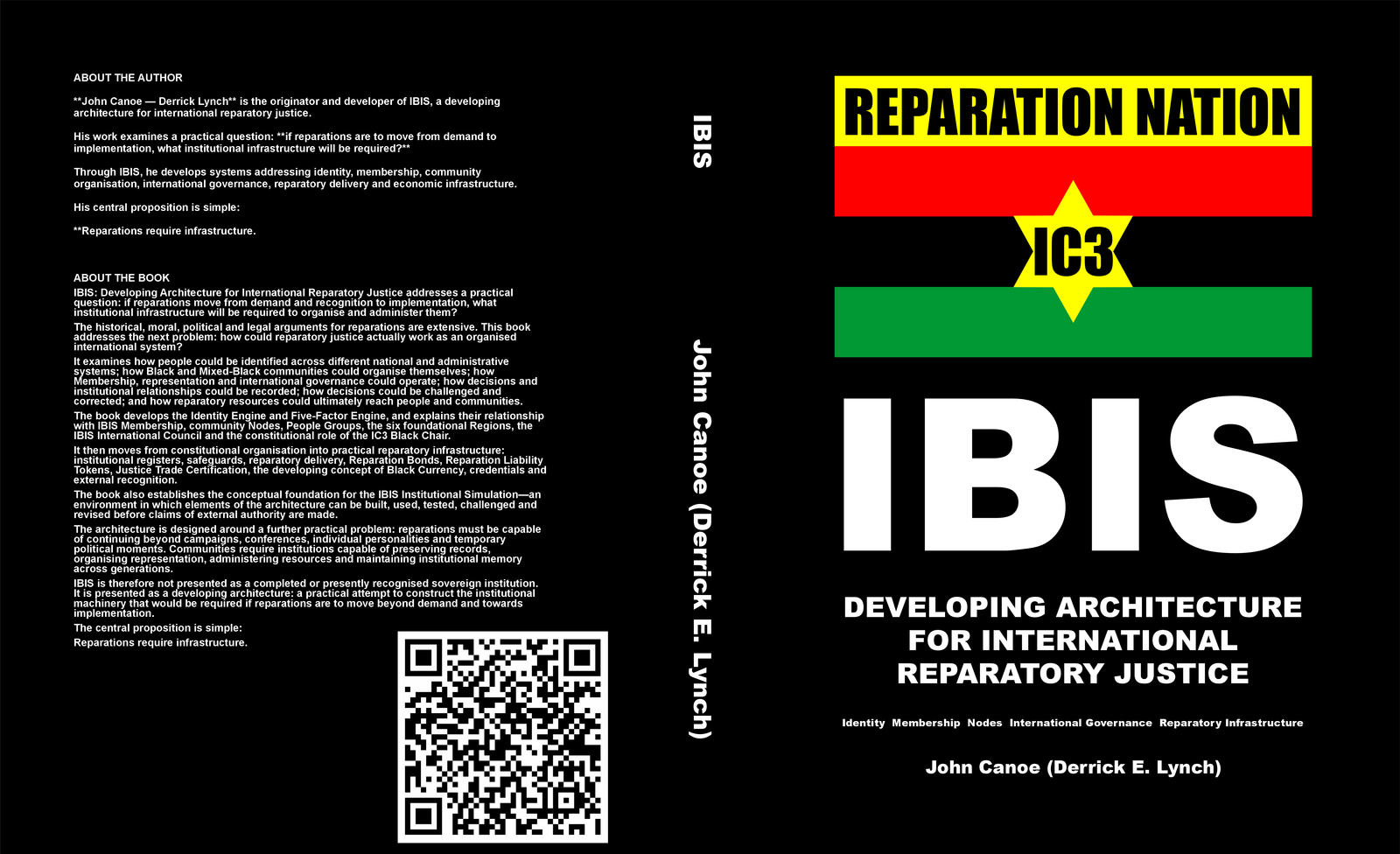
















IBIS is presented here as developing institutional, constitutional and technical architecture.
This simulation is a development and testing environment. It does not represent that IBIS presently possesses recognised sovereign-state status, recognised nationality or citizenship, diplomatic status, governmental authority, passport-issuing authority, privileges or immunities.
Proposed institutions, credentials, registers, financial mechanisms and constitutional structures displayed within the simulation must be understood according to their stated development status.
Enter the Simulation
Existing participants can authenticate using their Public ID and Access Key.
Participant LoginCreate Simulation Identity
Create a participant account and persistent institutional identity for use within the development environment.
Identity creation does not automatically establish IBIS Membership, Node membership, Regional representation, citizenship or reparatory entitlement.
Create IdentityDevelopment Method
The simulation exists so that institutional mechanisms can be exposed to practical use rather than being developed entirely on paper.
Where an architectural question remains unresolved, the system should preserve it as a Development Question rather than silently inventing a constitutional rule.
Current Institutional Architecture
The simulation treats the principal institutional layers as connected but distinct systems.
The State / Entity Channel, institutional registers, safeguards and review mechanisms, reparatory-delivery systems and proposed economic mechanisms are developed as separate institutional layers rather than being silently collapsed into the identity system.
Simulation Principle
The purpose of the simulation is not to pretend that an externally recognised government already exists.
Its purpose is to test the proposed architecture: identity, Membership, Nodes, representation, voting, registers, credentials, challenges, reparatory mechanisms and the relationships between them.
The development cycle is: design → simulate → test → challenge → revise → test again.